


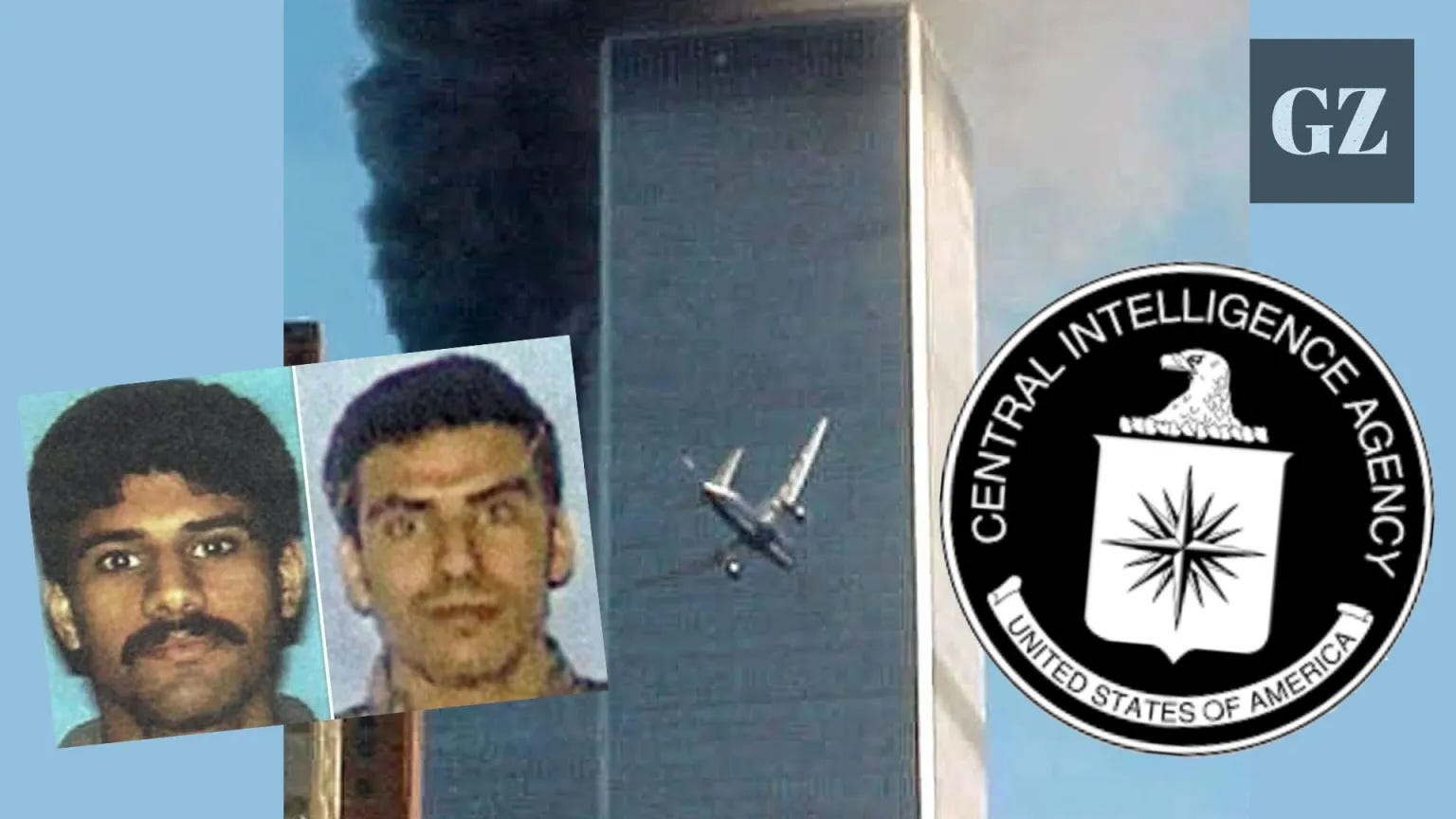
Twenty five years on, the mainstream media’s determination to reinforce the official story of 9/11 appears to be finally cracking. Major news outlets are now reporting on an ongoing civil suit in a New York court against Omar Bayoumi, long-accused of being the Saudi intelligence handler of 9/11 hijackers Nawaf Hazmi and Khalid Mihdhar. Back in April 2023, The Grayzone exposed how Riyadh recruited then managed the two would-be hijackers on behalf of the CIA.
As Max Blumenthal detailed in his 2019 book, The Management of Savagery, the CIA had at least sought to recruit Hazmi and Mihdhar. When a 21-page declaration by lead investigator for the Office of Military Commissions Don Canestraro finally appeared in unredacted form in 2023, the darkest suspicions about the two hijackers was confirmed: they had indeed been recruited into a joint CIA-Saudi intelligence operation which may have gone awry.
This September, numerous media reported for the first time on apparently incontrovertible evidence implicating Bayoumi in the planning and commission of the 9/11 attacks. Never before seen material, including video tapes featuring Bayoumi paintballing with Al Qaeda recruiter Anwar Awlaki - himself killed in a US drone strike in September 2011 - and walking around Washington DC in 1999 apparently scoping Capitol hill security measures, and a pencil sketch of the supposedly precise “mathematical calculation” of the Pentagon attack with an accompanying crude plane diagram.
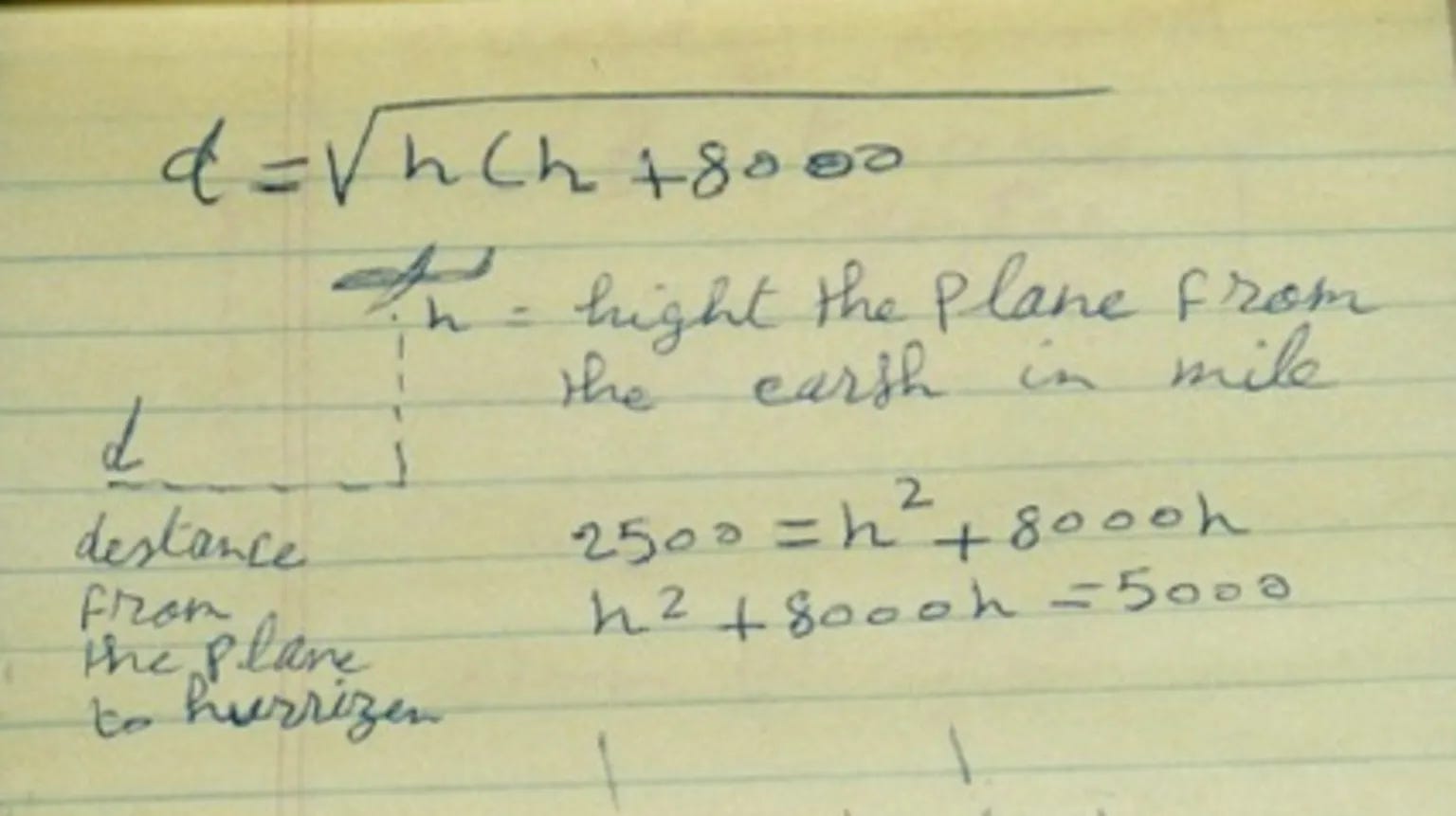
This almost unbelievably incriminating trove was seized from Bayoumi’s residence in Birmingham, UK, where he lived at the time of 9/11. Within just 11 days of that epoch-changing event, it was passed directly to the FBI. But its existence was inexplicably “withheld” by the Bureau, and the world is only learning of it now. In the meantime, Bayoumi was freed by British police after the US Department of Justice decided there was “insufficient evidence” to extradite him over his 9/11 role. A senior British detective has told primetime British TV the case against Bayoumi was open and shut, but “diplomatic pressure” insulated him from justice.
Media outlets which previously dismissed the possibility of a wider 9/11 plot involving a close US ally now felt free to report how a wide ranging conspiracy of silence prevented the FBI from interviewing Saudi officials strongly suspected of having financially and materially assisted Bayoumi, the hijackers, and their confederates.
However, in the rush to convict Riyadh at last over its 9/11 role, no reference has been made to the role of the US national security state in managing the Saudis’ involvement with Al Qaeda. In fact, it was the CIA’s shadowy bin Laden tracking unit, Alec Station, which shielded the presence of Hazmi, Midhar and other future hijackers from the FBI’s highest levels as they moved toward executing their “Day of the Planes” operation. And whether they knew it or not, Alec Station had recruited them as its eyes and ears inside Al Qaeda.
On April 18, 2023, Kit Klarenberg reported for The Grayzone on the blockbuster filing by Office of Military Commissions investigator Don Canestraro corroborating accounts of Hazmi and Mihdhar’s recruitment by the CIA. Kit’s article has become one of the most widely shared pieces we’ve published. Yet the rest of the media has suppressed his reporting.
The 9/11 families who brought a historic legal action are now demanding further disclosure of documents held by the US government on Riyadh’s role in the 9/11 attacks. Any future trial could throw up yet further revelations of Riyadh’s intimate cloak-and-dagger bond with the individuals who planned and executed 9/11. But the CIA’s guiding hand has been left out of the picture, almost by design.
As we reported in our 9/11 exposé, veterans of Alec Station - some of whom were implicated in the recruitment of Hazmi and Mihdhar, if not other hijackers - went on to be key players in the CIA’s post-9/11 torture program. They abused those positions to shape the official narrative of 9/11, eliciting confessions through extreme physical abuse which are now considered tainted and inadmissible in court. In doing so, they have written themselves out of the story.
The reporting that follows below is a historical corrective which places the CIA where it belongs: at the center of the 9/11 plot.
Bombshell filing: 9/11 hijackers were CIA recruits
At least two 9/11 hijackers had been recruited into a joint CIA-Saudi intelligence operation that was covered up at the highest level, according to an explosive new court filing.
By Kit Klarenberg
This article was published by The Grayzone on April 18, 2023
A newly-released court filing raises grave questions about the relationship between Alec Station, a CIA unit set up to track Al Qaeda chief Osama bin Laden and his associates, and two 9/11 hijackers leading up to the attacks, which was subject to a coverup at the highest levels of the FBI.
Obtained by SpyTalk, the filing is a 21-page declaration by Don Canestraro, a lead investigator for the Office of Military Commissions, the legal body overseeing the cases of 9/11 defendants. It summarizes classified government discovery disclosures, and private interviews he conducted with anonymous high-ranking CIA and FBI officials. Many agents who spoke to Canestraro headed up Operation Encore, the Bureau’s aborted, long-running probe into Saudi government connections to the 9/11 attack.
Despite conducting multiple lengthy interviews with a range of witnesses, producing hundreds of pages of evidence, formally investigating several Saudi officials, and launching a grand jury to probe a Riyadh-run US-based support network for the hijackers, Encore was abruptly terminated in 2016. This was purportedly due to a byzantine intra-FBI bust-up over investigative methods.
When originally released in 2021 on the Office’s public court docket, every part of the document was redacted except an “unclassified” marking. Given its explosive contents, it is not difficult to see why: as Canestraro’s investigation concluded, at least two 9/11 hijackers had been recruited either knowingly or unknowingly into a joint CIA-Saudi intelligence operation which may have gone awry.
‘A 50/50 chance’ of Saudi involvement
In 1996, Alec Station was created under the watch of the CIA. The initiative was supposed to comprise a joint investigative effort with the FBI. However, FBI operatives assigned to the unit soon found they were prohibited from passing any information to the Bureau’s head office without the CIA’s authorization, and faced harsh penalties for doing so. Efforts to share information with the FBI’s equivalent unit – the I-49 squad based in New York – were repeatedly blocked.
In late 1999, with “the system blinking red” about an imminent large-scale Al Qaeda terror attack inside the US, the CIA and NSA were closely monitoring an “operational cadre” within an Al Qaeda cell that included the Saudi nationals Nawaf al-Hazmi and Khalid al-Mihdhar. The pair would purportedly go on to hijack American Airlines Flight 77, which crashed into the Pentagon on 9/11.
Al-Hazmi and al-Midhar had attended an Al Qaeda summit that took place between January 5th and 8th 2000, in Kuala Lumpur, Malaysia. The meeting was secretly photographed and videotaped by local authorities at Alec Station’s request although, apparently, no audio was captured. En route, Mihdhar transited through Dubai, where CIA operatives broke into his hotel room and photocopied his passport. It showed that he possessed a multi-entry visa to the US.
A contemporaneous internal CIA cable stated this information was immediately passed to the FBI “for further investigation.” In reality, Alec Station not only failed to inform the Bureau of Mihdhar’s US visa, but also expressly forbade two FBI agents assigned to the unit from doing so.
“[I said] ‘we’ve got to tell the Bureau about this. These guys clearly are bad…we’ve got to tell the FBI.’ And then [the CIA] said to me, ‘no, it’s not the FBI’s case, not the FBI’s jurisdiction’,” Mark Rossini, one of the FBI agents in question, has alleged. “If we had picked up the phone and called the Bureau, I would’ve been violating the law. I…would’ve been removed from the building that day. I would’ve had my clearances suspended, and I would be gone.”
On January 15th, Hazmi and Mihdhar entered the US through Los Angeles International Airport, just weeks after the foiled Millennium plot. Omar al-Bayoumi, a Saudi government “ghost employee” immediately met them at an airport restaurant. After a brief conversation, Bayoumi helped them find an apartment near his own in San Diego, co-signed their lease, set them up bank accounts, and gifted $1,500 towards their rent. The three would have multiple contacts moving forward.
In interviews with Operation Encore investigators years later, Bayoumi alleged his run-in with the two would-be hijackers was mere happenstance. His extraordinary practical and financial support was, he claimed, simply charitable, motivated by sympathy for the pair, who could barely speak English and were unfamiliar with Western culture.
The Bureau disagreed, concluding Bayoumi was a Saudi spy, who handled a number of Al Qaeda operatives in the US. They also considered there to be a “50/50 chance” he – and by extension Riyadh – had detailed advance knowledge of the 9/11 attacks.
That remarkable finding wasn’t known publicly until two decades later, when a tranche of Operation Encore documents were declassified upon the Biden administration’s orders, and it was completely ignored by the mainstream media. Don Canestraro’s declaration now reveals FBI investigators went even further in their assessments.
A Bureau special agent, dubbed “CS-3” in the document, stated Bayoumi’s contact with the hijackers and support thereafter “was done at the behest of the CIA through the Saudi intelligence service.” Alec Station’s explicit purpose was to “recruit Al-Hazmi and Al-Mihdhar via a liaison relationship”, with the assistance of Riyadh’s General Intelligence Directorate.
A most ‘unusual’ CIA unit
Alec Station’s formal remit was to track bin Laden, “collect intelligence on him, run operations against him, disrupt his finances, and warn policymakers about his activities and intentions.” These activities would naturally entail enlisting informants within Al Qaeda.
Nonetheless, as several high level sources told Canestraro, it was extremely “unusual” for such an entity to be involved in gathering intelligence and recruiting assets. The US-based unit was run by CIA analysts, who do not typically manage human assets. Legally, that work is the exclusive preserve of case officers “trained in covert operations” and based overseas.
“CS-10”, a CIA case officer within Alec Station, concurred with the proposition that Hazmi and Mihdhar enjoyed a relationship with the CIA through Bayoumi, and was baffled that the unit was tasked with attempting to penetrate Al Qaeda in the first place. They felt it “would be nearly impossible…to develop informants inside” the group, given the “virtual” station was based in a Langley basement, “several thousand miles from the countries where Al Qaeda was suspected of operating.”
“CS-10” further testified that they “observed other unusual activities” at Alec Station. Analysts within the unit “would direct operations to case officers in the field by sending the officers cables instructing them to do a specific tasking,” which was “a violation of CIA procedures.” Analysts “normally lacked the authority to direct a case officer to do anything.”
“CS-11”, a CIA operations specialist posted to Alec Station “sometime prior to the 9/11 attacks” said they likewise “observed activity that appeared to be outside normal CIA procedures.” Analysts within the unit “mostly stuck to themselves and did not interact frequently” with others. When communicating with one another through internal cables, they also used operational pseudonyms, which “CS-11” described as peculiar, as they were not working undercover, “and their employment with the CIA was not classified information.”
The unit’s unusual operational culture may explain some of the stranger decisions made during this period vis a vis Al Qaeda informants. In early 1998, while on a CIA mission to penetrate London’s Islamist scene, a joint FBI-CIA informant named Aukai Collins received a stunning offer: bin Laden himself wanted him to go to Afghanistan so they could meet.
Collins relayed the request to his superiors. While the FBI was in favor of infiltrating Al Qaeda’s base, his CIA handler nixed the idea, saying, “there was no way the US would approve an American operative going undercover into Bin Laden’s camps.”
Similarly, in June 2001, CIA and FBI analysts from Alec Station met with senior Bureau officials, including representatives of its own Al Qaeda unit. The CIA shared three photos of individuals who attended the Kuala Lumpur meeting 18 months earlier, including Hazmi and Mihdhar. However, as an FBI counter-terror officer codenamed “CS-15” recalled, the dates of the photos and key details about the figures they depicted were not revealed. Instead, the analysts simply asked if the FBI “knew the identities of the individuals in the photos.”
Another FBI official present, “CS-12”, offers an even more damning account. The Alec Station analysts not only failed to offer biographical information, but falsely implied one of the individuals might be Fahd Al-Quso, a suspect in the bombing of the USS Cole. What’s more, they outright refused to answer any questions related to the photographs. Nonetheless, it was confirmed that no system was in place to alert the FBI if any of the three entered the US – a “standard investigative technique” for terror suspects.
Given Hazmi and Mihdhar appeared to be simultaneously working for Alec Station in some capacity, the June 2001 meeting may well have been a dangle. No intelligence value could be extracted from inquiring whether the Bureau knew who their assets were, apart from ascertaining if the FBI’s counter-terror team was aware of their identities, physical appearances, and presence in the US.
Quite some coverup
Another of Canestraro’s sources, a former FBI agent who went by “CS-23,” testified that after 9/11, FBI headquarters and its San Diego field office quickly learned of “Bayoumi’s affiliation with Saudi intelligence and subsequently the existence of the CIA’s operation to recruit” Hazmi and Mihdhar.
However, “senior FBI officials suppressed investigations” into these matters. “CS-23” alleged, furthermore, that Bureau agents testifying before the Joint Inquiry into 9/11 “were instructed not to reveal the full extent of Saudi involvement with Al-Qaeda.”
The US intelligence community would have had every reason to shield Riyadh from scrutiny and consequences for its role in the 9/11 attacks, as it was then one of its closest allies. But the FBI’s eager complicity in Alec Station’s coverup may have been motivated by self-interest, as one of its own was intimately involved in the unit’s effort to recruit Hazmi and Mihdhar, and conceal their presence in the US from relevant authorities.
“CS-12”, who attended the June 2001 meeting with Alec Station, told Canestraro that they “continued to press FBI Headquarters for further information regarding the subjects in the photographs” over that summer. On August 23rd, they stumbled upon an “electronic communication” from FBI headquarters, which identified Hazmi and Mihdhar, and noted they were in the US.
“CS-12” then contacted the FBI analyst within Alec Station who authored the communication. The conversation quickly became “heated”, with the analyst ordering them to delete the memo “immediately” as they were not authorized to view it. While unnamed in the declaration, the FBI analyst in question was Dina Corsi.
The next day, on a conference call between “CS-12”, Corsi, and the FBI’s bin Laden unit chief, “officials at FBI headquarters” explicitly told “CS-12” to “stand down” and “cease looking” for Mihdhar, as the Bureau intended to open an “intelligence gathering investigation” on him. The next day, “CS-12” emailed Corsi, stating bluntly “someone is going to die” unless Mihdhar was pursued criminally.
It was surely no coincidence that two days later, on August 26th, Alec Station finally informed the FBI that Hazmi and Mihdhar were in the US. By then, the pair had entered the final phase of preparations for the impending attacks. If a criminal probe had been opened, they could have been stopped in their tracks. Instead, as foreshadowed by the officials in contact with “CS-12,” an intelligence investigation was launched which hindered any search efforts.
In the days immediately after the 9/11 attacks, “CS-12” and other New York-based FBI agents participated in another conference call with Bureau headquarters. During the conversation, they learned Hazmi and Mihdhar were named on Flight 77’s manifest. One analyst on the line ran the pair’s names through “commercial databases,” quickly finding them and their home address listed in San Diego’s local phone directory. It turned out they had been living with an FBI informant.
“CS-12” soon contacted Corsi “regarding information on the hijackers.” She responded by providing a photograph from the same surveillance operation that produced the three pictures presented at the June 2001 meeting between Alec Station and FBI agents; they depicted Walid bin Attash, a lead suspect in Al Qaeda’s 1998 East Africa US Embassy bombings and its attack on the USS Cole.
Corsi was unable to explain why the photo was not shown to FBI agents earlier. If it had been, “CS-12” claims they would have “immediately linked” Hazmi and Mihdhar to bin Attash, which “would have shifted from an intelligence based investigation into a criminal investigation.” The FBI’s New York field office could have then devoted its “full resources” to finding the hijackers before the fateful day of September 11, 2001.
Alec Station operatives fail upwards
Alec Station’s tireless efforts to protect its Al Qaeda assets raises the obvious question of whether Hazmi and Mihdhar, and possibly other hijackers, were in effect working for the CIA on the day of 9/11.
The real motives behind the CIA’s stonewalling may never be known. But it appears abundantly clear that Alec Station did not want the FBI to know about or interfere in its secret intelligence operation. If the unit’s recruitment of Hazmi and Mihdhar was purely dedicated to information gathering, rather than operational direction, it is incomprehensible that the FBI had not been apprised of it, and was instead actively misdirected.
Several FBI sources consulted by Canestraro speculated that the CIA’s desperation to penetrate Al Qaeda prompted it to grant Alec Station the power to recruit assets, and pressured it to do so. But if this were truly the case, then why did Langley refuse the opportunity to send Aukai Collins – a proven deep cover asset who had infiltrated several Islamist gangs – to penetrate bin Laden’s network in Afghanistan?
One alternative explanation is that Alec Station, a powerful rogue CIA team answerable and accountable to no one, sought to infiltrate the terror group for its own sinister purposes, without the authorization and oversight usually required by Langley in such circumstances. Given that Collins was a joint asset shared with the FBI, he could not be trusted to participate in such a sensitive black operation.
No member of Alec Station has been punished in any way for the supposed “intelligence failures” that allowed 9/11 to go ahead. In fact, they have been rewarded. Richard Blee, the unit’s chief at the time of the attacks, and his successor Alfreda Frances Bikowsky, both joined the CIA’s operations division, and became highly influential figures in the so-called war on terror. Corsi, for her part, was promoted at the FBI, eventually rising to the rank of Deputy Assistant Director for Intelligence.
In a perverse twist, the Senate Intelligence Committee’s report on the CIA’s torture program found that Bikowsky had been a key player in the agency’s black site machinations, and one of their chief public apologists. It is increasingly clear that the program was specifically concerned with eliciting false testimony from suspects in order to justify and expand the US war on terror.
The public’s understanding of the 9/11 attacks is heavily informed by testimonies delivered by CIA torture victims under the most extreme duress imaginable. And Bikowsky, a veteran of the Alec Station that ran cover for at least two would-be 9/11 hijackers, had been in charge of interrogating the alleged perpetrators of the attacks.
The veteran FBI deep cover agent Aukai Collins concluded his memoir with a chilling reflection which was only reinforced by Don Canestraro’s bombshell declaration:
“I was very mistrustful about the fact that bin Laden’s name was mentioned literally hours after the attack… I became very skeptical about anything anybody said about what happened, or who did it. I thought back to when I was still working for them and we had the opportunity to enter Bin Laden’s camp. Something just hadn’t smelled right…To this day I’m unsure who was behind September 11, nor can I even guess… Someday the truth will reveal itself, and I have a feeling that people won’t like what they hear.”
Silverstein obtained an insurance policy that included a double-occurrence clause, allowing him to claim up to $4.55 billion!
9-11 : A Legacy Of Troubling Questions....
The big one was 911 - and Dick Cheney in on the crime...
Two things about this London Tower fire(June 14, 2017) and the 911
tragedy stands out.
1. The horror of all those victims trapped in that inferno.
2. The fact is a poorly constructed building in London made from steel
is still standing. Can anyone name any steel structures that have come
down because of fire other than the towers in New York in the last 100
years?
***************************
What really happen on 9-11 by Dr. Judy Wood: See videos
https://www.youtube.com/watch?v=E2NFKJKFZX8
https://www.youtube.com/watch?v=NZJZRxBrS4I
At 9-11:
1400 Toasted Cars “Located blocks from the WTC buildings, with door
handles missing, engine blocks missing, blistering on some parts of
the car finish, strange rust patterns on the bodies of the cars.”
********************
Figure 5(a). burned out cars and bus
Consistently, they seem to have missing door handles.
And the gas tanks don't appear to explode.
Figure firetruck. A badly damaged firetruck. Where did its engine go?
The bottom of the tire has turned to goo below a distict horizontal
line in the tire.
**********************
Figure 66(h). Is there something attractive about engine blocks? Why
not gasoline fuel tanks?
Figure 66(e). Why would the front of this fire truck wilt?
***********************
Figure flip. Why is this car upside down? A burned out SUV with
missing windows and toasted front end is parked in front of WFC2 on
West Street but will not be moving under its own power.
**********************
Pile of Cars Spontaneously Combusted
“In a news video, the entire pile of cars started burning
spontaneously at the same time with no visible cause, it was not a
fire that started in one car and spread to others.”
***********************
Dr. Judy Wood, a former assistant professor at Clemson University, has
developed compelling evidence that a directed energy weapon turned the
physical matter of the World Trade Center towers into nano-particles
through the process of molecular dissociation.
******************************
1400 Toasted Cars “Located blocks from the WTC buildings, with door
handles missing, engine blocks missing, blistering on some parts of
the car finish, strange rust patterns on the bodies of the cars.”
*******************************
http://www.drjudywood.com/articles/DEW/StarWarsBeam5.html
http://www.drjudywood.com/articles/DEW/moretoastedcars.html
Seismic Record:
“The energy budget recorded in the seismic record on the day of 9/11
and the collapse of the WTC buildings did not reflect the mass of
building materials involved in the collapse, nor the nearly freefall
of the collapsing buildings. The seismic record demonstrates an event
on the scale of a quarry blast. Where was the thud [that would have
accompanied a WTC building collapse]?”
******************
Kinetic Energy:
“Two robust WTC buildings with very robust steel beam reinforcement
would release a sizable amount of kinetic energy from the buildings
falling – that would be all of the energy that went into the
construction of the WTC buildings. The release of that amount of
kinetic energy is not reflected in the physical evidence on the
seismic record. Into what physical process did that kinetic energy
go?”
**************************
Molecular Dissociation:
“The collapse of the WTC buildings produced the highest mass per
volume of very fine particles (nanoparticles) ever measured in an air
sample in the United States. It takes a tremendous amount of energy to
dissociate or break the molecular bonds of steel, concrete and other
building materials that were “powdered” into very fine particles
during the collapse of the buildings. The largest mass per volume of
metals ever measured in an air sample in the US were reported by Dr.
Thomas Cahill who did air monitoring for 5 months. Metal is used in
buildings because it is very strong – and would require large amounts
of energy to reduce it to nanoparticles. Chemical explosives do not
release enough energy to produce that volume of very fine particles. A
much more energetic process was involved such as laser or beam energy
which releases focused and concentrated energy as complex waveforms
necessary to cause molecular dissociation.”
*********************************************
Physical Evidence of Buildings Collapsing:
“In videos of the collapses on 9/11 the WTC buildings erupted into
emulsion like a drinking fountain, and the rubble did not hit the
ground. Even on tape huge pieces of aluminum building siding vaporized
as they were freefalling, and never hit the ground.”
*****************************************************
http://www.drjudywood.com/articles/DEW/
https://terral.substack.com/p/the-wtc-7-collapse-was-a-controlled
https://terral.substack.com/p/the-911truth-exposing-the-cheney
https://terral.substack.com/p/911-inside-job-what-really-happened
https://terral.substack.com/p/tina-at-counterculturemomcom-interviews